

Introduction to On-Page SEO
On-page SEO the process of optimising individual web pages to make them rank well in search results in Google and increase relevant organic traffic. On page optimization techniques mainly involve improving the content, as well as the HTML, and the user experience, so that it becomes easy for search engines to understand.
Techniques are no longer only focused on keywords; they also involve search intent, content quality, user experience, and AI-friendly content structure.
On-page SEO helps search engines understand your content better. According to Google SEO guidelines, optimising page elements improves search visibility.
Keyword Research & Search Intent Optimisation
Keyword research is the foundation of on-page SEO. In 2026, intent is key instead of the repetition of the keyword.
What to Focus On
Find Primary Keyword (Main Topic Keyword)
Add secondary & semantic keywords
Match search intent (informational/transactional/navigational)
Use conversational and long-tail keywords
The search is becoming AI-driven; hence, content needs to be presented in a way that is clear and easy to read, using semantic keywords and answer-based formatting. If you need expert help with keyword strategy, you can explore our SEO Services.
Title Tag Optimisation in on-page SEO
Your title tag is one of the strongest ranking and CTR factors.
Best Practices
- Keep title length 50–60 characters
- Add the primary keyword near the beginning
- Use power words like “Ultimate”, “Complete, “and “Proven”
- Make it attractive but not clickbait
Title tags help Google understand a page’s topic and influence whether users click your result.
Meta Description Optimisation in On-Page SEO
Meta descriptions don’t directly impact rankings but strongly affect clicks.
On-Page SEO – Best Practices
- Keep length 150–160 characters
- Add primary keyword naturally
- Add benefit + CTA
Every page should have a unique title and meta description with target keywords
SEO-Friendly URL Structure
URLs help search engines understand page relevance.
Best Practices
- Keep URLs short and descriptive
- Use hyphens (not underscores)
- Avoid unnecessary parameters
- Add the main keyword naturally
Clean URLs improve crawlability and user trust.
Content Optimisation (Most Important Factor for On-Page SEO)
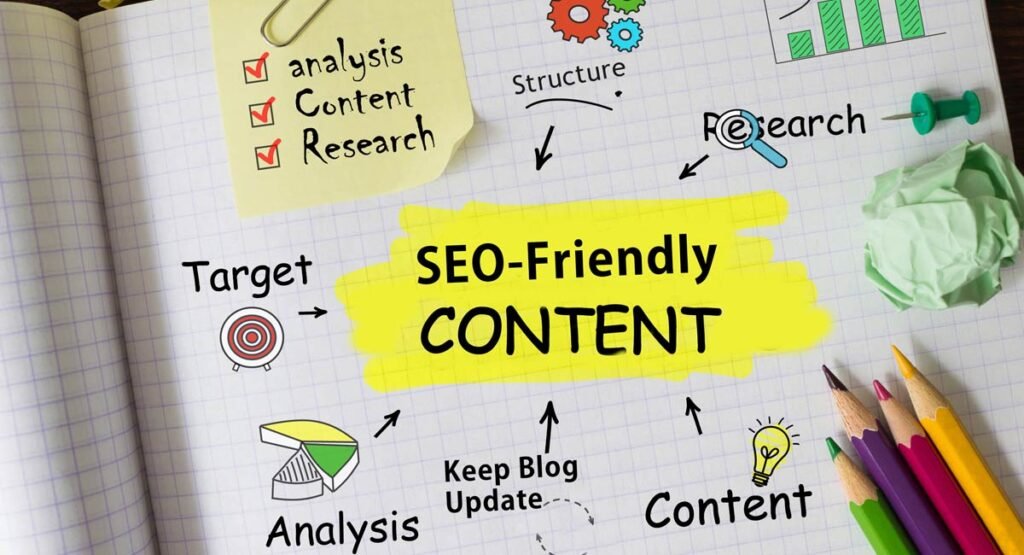
Content quality is still the biggest ranking factor.
Write Content That
- Solves user problems
- Is unique and original
- Covers the topic deeply
- Uses natural keyword placement
Long-form valuable content performs better than thin or duplicate content.
Also, modern SEO focuses on covering entities and related concepts, not just repeating keywords.
Heading Tags Optimization (H1, H2, H3)
Headings help search engines and users understand content structure.
Best Practices
- Use only one H1
- Use H2 and H3 logically
- Add keywords naturally
Proper content structure improves readability and SEO performance.
SEO-Friendly URL Structure
Internal links help search engines crawl your site and distribute authority.
Best Practices
- Use descriptive anchor text
- Link relevant pages naturally
- Avoid orphan pages
- Maintain logical link structure
Many SEO guides suggest contextual internal linking based on content length and relevance.
Image Optimization
Images help SEO and user experience.
On-Page SEO Best Practices
- Use descriptive file names
- Add relevant ALT text
- Compress images
- Use modern formats like WebP
Image optimisation also helps improve Core Web Vitals and loading speed.
How On-Page SEO Helps Improve Page Experience & Core Web Vitals
Google measures real user experience through Core Web Vitals.
Main Metrics
- LCP → Loading speed
- INP/FID → Interactivity
- CLS → Visual stability
Improving these improves both SEO and user satisfaction.
Also, fast loading, mobile-first design, and clean layout are now non-negotiable ranking factors.
E-E-A-T (Experience, Expertise, Authority, Trust)
Google evaluates content credibility.
How to Improve
- Add author bio
- Show real experience or case studies
- Add trust signals (reviews, credentials)
Content without real expertise is losing visibility in modern search.
Technical On-Page SEO Elements
Important Elements
- Schema markup
- HTTPS security
- Canonical tags
- Mobile responsiveness
- Page speed optimisation
These help search engines understand and trust your content better. You can check performance using Google PageSpeed Insights.
Content Updates & Performance Tracking
SEO is not one-time work.
Track Using
- Google Search Console
- Google Analytics
- PageSpeed Insights
Regular updates improve long-term ranking and traffic.
Conclusion
On-page SEO in 2026 is about quality + intent + experience + technical optimisation.
If you follow this checklist:
- Optimize content for search intent
- Improve technical structure
- Focus on user experience
- Build authority and trust
You can significantly improve your Google rankings and organic traffic.
If you want to improve your website ranking, feel free to Contact Our SEO Experts.