

In today’s digital world, appearing on the first page of Google is no longer optional—it’s essential. Whether you own a local business, an e-commerce store, a startup, or a service-based company, ranking higher on Google can significantly increase your website traffic, leads, and sales.
With Google’s search algorithms becoming smarter in 2026, businesses need a strategic SEO approach rather than outdated ranking tricks. In this guide, we’ll explain everything you need to know to improve your Google rankings and grow your online presence.
What is Google SEO?
Search Engine Optimisation (SEO) is the process of improving your website so that it appears higher in Google’s organic search results. A well-optimised website attracts more qualified visitors without relying entirely on paid advertising.
SEO combines technical improvements, valuable content, keyword optimisation, user experience, and authority-building strategies to help search engines understand your website.
Why Google Rankings Matter in 2026
More than ever, customers search online before making purchasing decisions. Businesses that rank on the first page receive the majority of clicks and enjoy higher credibility.
Higher rankings help you:
- Increase organic website traffic
- Generate high-quality leads
- Build customer trust
- Improve brand visibility
- Reduce advertising costs
- Achieve long-term business growth
Step 1: Choose the Right Keywords
Keyword research is the foundation of successful SEO.
Focus on keywords your customers are actively searching for.
Examples include:
- Digital Marketing Agency
- SEO Services
- Website Development Company
- Google Ads Agency
- Social Media Marketing
- Local SEO Services
- Google Business Profile Optimisation
- Best Digital Marketing Company
Use both short-tail and long-tail keywords naturally throughout your content.
Step 2: Optimise Your Website Structure
Google prefers websites that are organised and easy to navigate.
Your website should include:
- Clear navigation
- Fast loading pages
- Mobile-friendly design
- HTTPS security
- Clean URLs
- Internal linking
- Easy-to-read page layout
A well-structured website improves both user experience and search engine crawling.
Step 3: Publish High-Quality Content
Content continues to be one of the strongest ranking factors.
Create helpful blog posts that solve customer problems.
Examples include:
- SEO Tips
- Google Ads Guides
- Website Design Trends
- Social Media Marketing Strategies
- AI Marketing Tips
- Local Business Marketing
Focus on quality instead of publishing large amounts of low-value content.
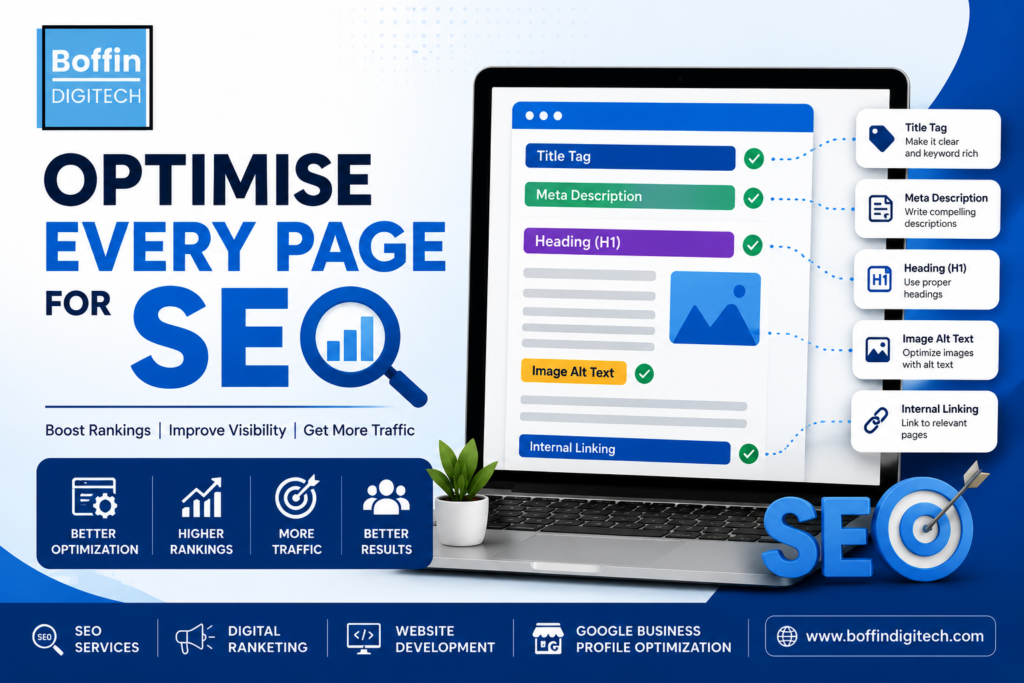
Step 4: Optimise Every Page for SEO
Each webpage should include:
SEO Title
Include your primary keyword near the beginning.
Meta Description
Write an engaging description encouraging users to click.
Headings
Use H1, H2, and H3 headings correctly.
Images
Optimise images by:
- Compressing file sizes
- Adding descriptive filenames
- Writing keyword-rich alt text
Internal Links
Connect related pages and blog posts to improve user navigation.
Step 5: Improve Website Speed
A slow website leads to poor user experience and lower rankings.
Improve speed by:
- Compressing images
- Using browser caching
- Reducing unnecessary plugins
- Optimizing code
- Choosing reliable hosting
Google rewards websites that load quickly.
Step 6: Optimise Your Google Business Profile
For local businesses, your Google Business Profile is one of the most important ranking factors.
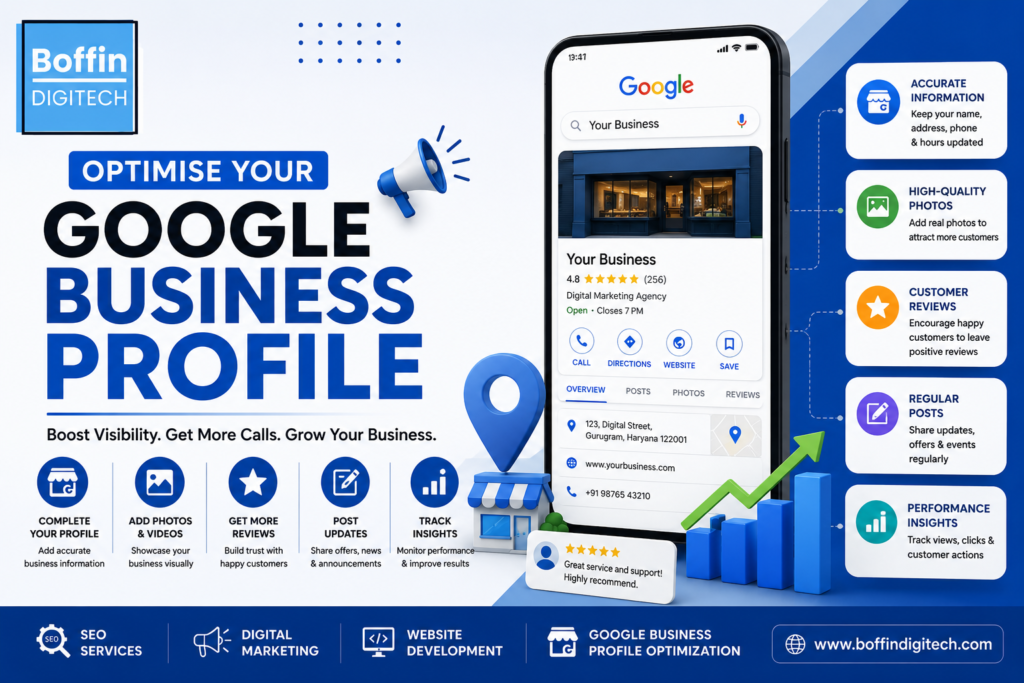
Ensure your profile includes:
- Accurate business name
- Correct phone number
- Business address
- Website link
- Business hours
- High-quality photos
- Customer reviews
- Regular posts
- Service descriptions
Keep your information updated regularly.
Step 7: Build High-Quality Backlinks
Backlinks remain a major ranking signal.
Earn links by:
- Publishing valuable content
- Guest blogging
- Business directory listings
- Local citations
- Press releases
- Industry partnerships
Focus on quality backlinks rather than quantity.
Step 8: Focus on Local SEO
If you serve a specific city or region, local SEO is essential.
Optimise for:
- City-based keywords
- Google Maps rankings
- Local business directories
- Customer reviews
- Local content
- Location pages
Local SEO helps nearby customers find your business more easily.
Step 9: Use AI Responsibly
AI tools can improve productivity by helping with:
- Keyword research
- Content ideas
- SEO audits
- Content optimization
- Competitive analysis
However, always review and enhance AI-generated content with human expertise to ensure accuracy and originality.
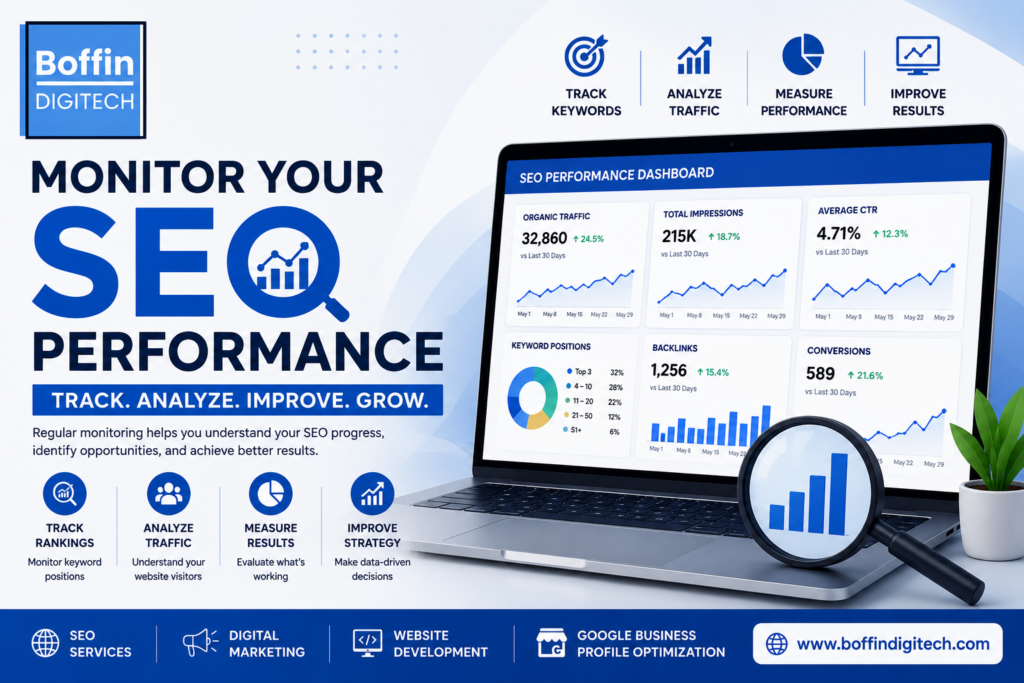
Step 10: Monitor Your SEO Performance
Track your progress using analytics tools.
Measure:
- Organic traffic
- Keyword rankings
- Click-through rate
- Conversion rate
- Bounce rate
- User engagement
Regular analysis helps you identify opportunities for improvement.
Common SEO Mistakes to Avoid
Many businesses struggle to rank because they:
- Stuff keywords unnaturally
- Publish duplicate content
- Ignore mobile optimization
- Have slow websites
- Skip technical SEO
- Don’t update old content
- Neglect internal linking
- Ignore customer reviews
Avoiding these mistakes can significantly improve your search performance.
Why Choose Boffin Digitech?
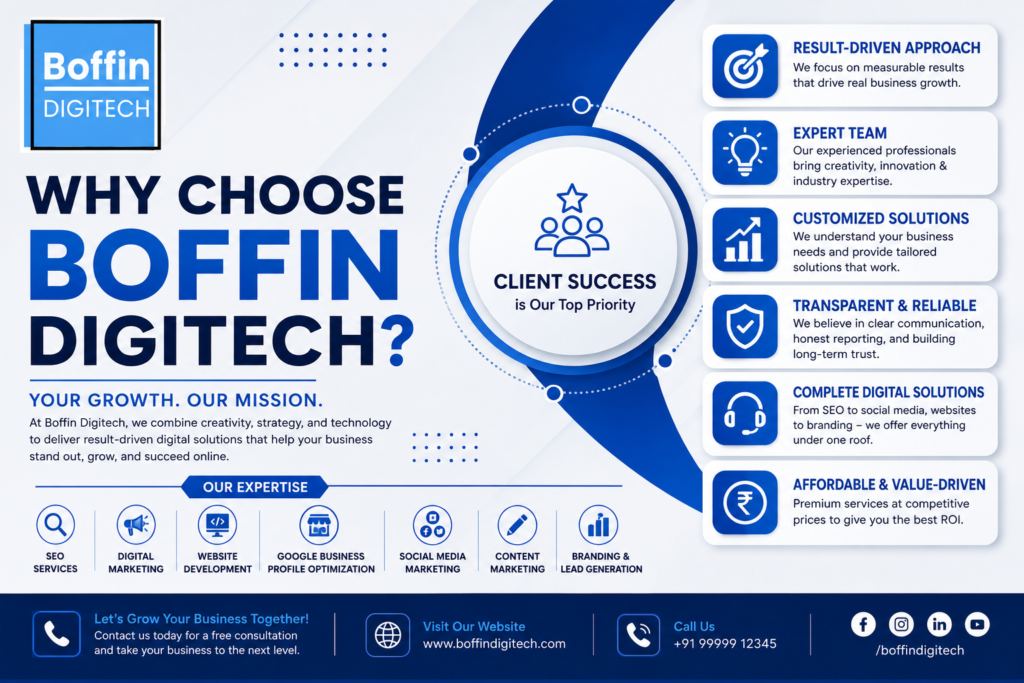
At Boffin Digitech, we help businesses grow through data-driven digital marketing strategies.
Our services include:
- Search Engine Optimisation (SEO)
- Google Ads Management
- Social Media Marketing
- Website Design & Development
- Google Business Profile Optimisation
- Content Marketing
- Branding
- Performance Marketing
Our team focuses on sustainable growth using ethical, results-oriented SEO practices tailored to your business goals.
Final Thoughts
Ranking your business on Google in 2026 requires more than simply adding keywords to your website. Success comes from delivering value to users, maintaining a technically sound website, creating high-quality content, and continuously optimising your online presence.
Businesses that invest in SEO today are more likely to attract qualified traffic, generate consistent leads, and achieve long-term growth. By following the strategies outlined in this guide, you can improve your visibility and stay competitive in an evolving digital landscape.
If you’re looking for expert support with SEO, local search optimisation, or digital marketing, Boffin Digitech is here to help your business succeed online.
Author: Krishna Tiwari
Digital Marketer | Boffin Digitech