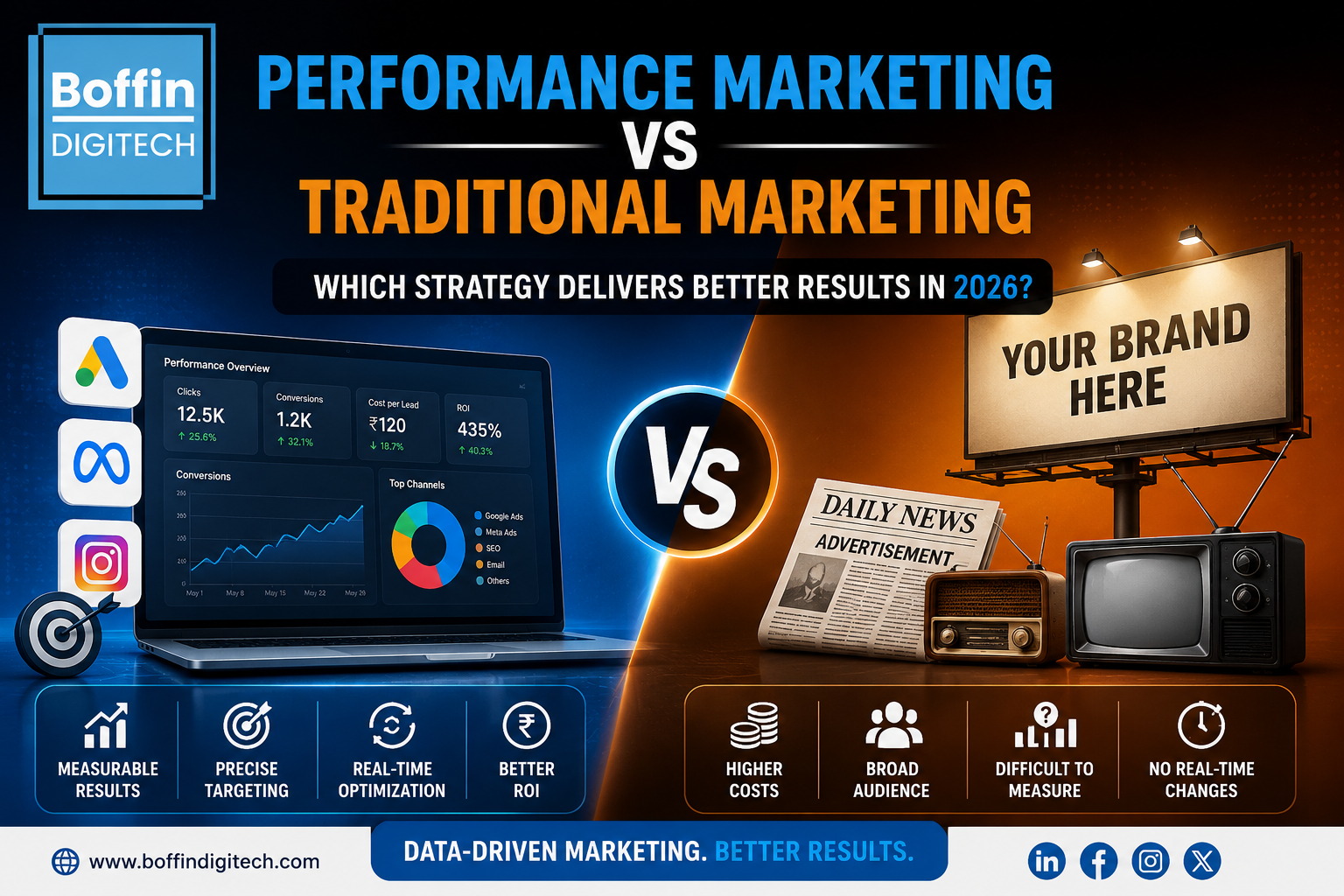
Marketing has evolved dramatically over the last decade. Businesses no longer rely only on newspapers, television, radio, or billboards to reach their audience. Today, digital platforms allow brands to target the right customers, measure every click, and optimise campaigns in real time.
This has led to the rise of Performance Marketing, a data-driven approach where businesses pay for measurable results rather than just exposure. Meanwhile, Traditional Marketing continues to play an important role in building brand awareness and credibility, especially for established businesses.
So, which marketing strategy is better for your business in 2026? Let’s compare both approaches to help you make the right decision.
What is Traditional Marketing?
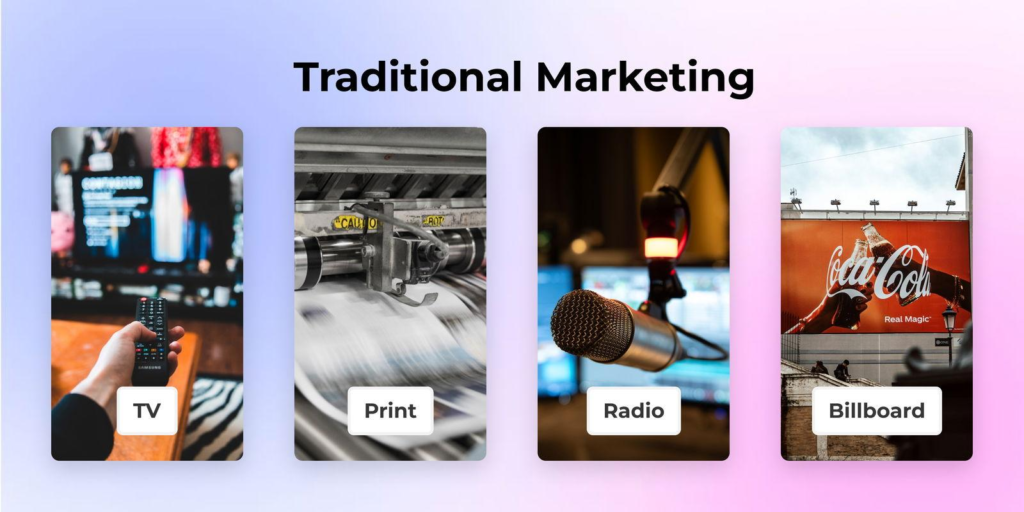
Traditional marketing refers to promotional methods that have been used for decades. These include:
- Television advertisements
- Radio commercials
- Newspaper advertisements
- Magazine promotions
- Billboards and hoardings
- Flyers and brochures
- Direct mail campaigns
The primary objective of traditional marketing is to create broad brand awareness among a large audience.
Advantages of Traditional Marketing
- Builds strong brand recognition
- Effective for local and regional advertising
- High credibility among older audiences
- Excellent for mass-market campaigns
- Creates lasting offline visibility
Limitations of Traditional Marketing
- High advertising costs
- Difficult to measure campaign performance
- Limited audience targeting
- No real-time optimisation
- Lower return on investment for many small businesses
What is Performance Marketing?
Performance marketing is a digital marketing strategy where businesses pay based on measurable actions such as:
- Website visits
- Leads
- Purchases
- App installs
- Form submissions
- Phone calls
- Newsletter sign-ups
Unlike traditional advertising, every campaign can be tracked and optimised using real-time data.
Popular performance marketing channels include:
- Google Ads
- Meta (Facebook & Instagram) Ads
- LinkedIn Ads
- YouTube Ads
- Search Engine Optimization (SEO)
- Email Marketing
- Affiliate Marketing
Performance Marketing vs Traditional Marketing
| Feature | Performance Marketing | Traditional Marketing |
|---|---|---|
| Cost | Flexible and scalable | Usually expensive |
| Target Audience | Highly specific | Broad audience |
| Measurability | Real-time tracking | Limited tracking |
| ROI | Easy to calculate | Difficult to measure |
| Optimization | Instant improvements | Cannot modify once published |
| Reach | Local, national, or global | Mostly regional |
| Speed | Quick campaign launch | Longer planning process |
| Personalization | Highly personalized | One message for everyone |
Why Businesses Are Choosing Performance Marketing
1. Better Return on Investment (ROI)
One of the biggest advantages of performance marketing is that every rupee spent can be measured. Businesses know exactly:
- Cost per click (CPC)
- Cost per lead (CPL)
- Cost per acquisition (CPA)
- Conversion rate
- Return on ad spend (ROAS)
This helps companies invest their budgets more effectively.
2. Advanced Audience Targeting
Performance marketing enables businesses to target audiences based on:
- Age
- Gender
- Location
- Interests
- Online behavior
- Purchase history
- Device type
This ensures advertisements reach people who are most likely to become customers.
3. Real-Time Campaign Optimisation
If an advertisement isn’t performing well, marketers can immediately adjust:
- Headlines
- Images
- Videos
- Audience segments
- Budgets
- Keywords
- Landing pages
This flexibility improves campaign performance and reduces wasted spending.
4. Faster Results
Unlike traditional marketing, digital campaigns can begin generating traffic, leads, and sales within hours of launching.
Businesses can scale successful campaigns quickly by increasing budgets and expanding target audiences.
5. Detailed Performance Analytics
Performance marketing platforms provide insights such as:
- Website traffic
- Click-through rates
- Lead quality
- Sales conversions
- Customer acquisition cost
- Revenue generated
These analytics support smarter business decisions.
When Traditional Marketing Still Works
Traditional marketing remains effective for:
- National brand awareness campaigns
- Political campaigns
- Luxury brands
- Retail store promotions
- Real estate projects
- Local community events
- Product launches with mass audiences
Large organisations often combine traditional and digital marketing to maximise reach.
Which Businesses Benefit Most from Performance Marketing?
Performance marketing is particularly valuable for:
- Startups
- Small businesses
- E-commerce stores
- Educational institutions
- Healthcare providers
- Real estate companies
- Manufacturing businesses
- Service-based companies
- SaaS businesses
- Local businesses
These organizations benefit from measurable growth while maintaining control over marketing budgets.Can Performance Marketing and Traditional Marketing Work Together?
Absolutely.
The most successful brands use an integrated marketing strategy.
For example:
- A television advertisement creates brand awareness.
- Social media ads retarget interested viewers.
- Google Search Ads capture purchase intent.
- SEO attracts long-term organic traffic.
- Email marketing nurtures leads into customers.
This combination strengthens the customer journey and increases conversions.
Tips for Choosing the Right Marketing Strategy
Choose Traditional Marketing if you want to:
- Reach a broad audience quickly
- Build long-term brand recognition
- Promote offline events
- Increase local visibility
Choose Performance Marketing if you want to:
- Generate qualified leads
- Increase online sales
- Measure campaign performance
- Optimize marketing budgets
- Improve ROI
- Scale your business efficiently
The Future of Marketing in 2026
Artificial Intelligence, automation, predictive analytics, and personalization are transforming the marketing landscape.
Businesses now expect:
- AI-powered audience targeting
- Automated campaign optimization
- Personalized customer experiences
- Data-driven decision-making
- Omnichannel marketing strategies
Performance marketing is evolving rapidly, making it one of the most effective ways for businesses to achieve sustainable growth in the digital age.
Conclusion
Both traditional marketing and performance marketing have their strengths. Traditional marketing excels at building widespread brand awareness, while performance marketing delivers measurable results, better targeting, and higher return on investment.
For most modern businesses, especially startups and growing companies, performance marketing offers greater flexibility, transparency, and scalability. However, combining both approaches can create a powerful marketing strategy that builds brand recognition while driving measurable business growth.
Whether you’re looking to generate more leads, increase online sales, or strengthen your brand presence, choosing the right mix of marketing channels can make all the difference.
Why Choose Boffin DigiTech?
At Boffin DigiTech, we help businesses grow through result-driven digital marketing solutions. From Google Ads and Meta Ads to SEO, website development, branding, and AI-powered marketing strategies, our team focuses on delivering measurable outcomes that maximise your return on investment.
Ready to grow your business? Contact Boffin DigiTech today and let our experts build a customised marketing strategy that delivers real results.