

Introduction: Understanding SEO and Paid Advertising
In today’s digital world, every business wants more visibility, more website traffic, and ultimately more customers. But when it comes to online marketing, one common question arises: Should you invest in SEO or Paid Ads?
Search Engine Optimization (SEO) and Paid Advertising are two of the most powerful digital marketing strategies available today. Both help businesses appear on search engines like Google, attract potential customers, and increase conversions. However, they work in very different ways.
SEO focuses on improving your website’s organic rankings through content optimization, technical improvements, and authority building. It is a long-term strategy that builds credibility and sustainable traffic over time.
On the other hand, Paid Advertising (such as PPC campaigns) allows businesses to instantly appear at the top of search results or social media platforms by paying for clicks. It delivers quick visibility and immediate leads but requires continuous investment.
Understanding the difference between SEO and Paid Ads is essential to choosing the right strategy for your business goals, budget, and growth timeline. In this blog, we’ll break down both approaches to help you decide which one is better for your business.
What is SEO? Meaning, Types & How It Works
Search Engine Optimization (SEO) is the process of improving a website’s visibility in organic (non-paid) search engine results. The main goal of SEO is to rank higher on search engines like Google so that potential customers can easily find your business when they search for relevant keywords. Unlike paid advertising, SEO focuses on earning traffic naturally by optimizing different elements of your website. When done correctly, SEO helps drive consistent, long-term traffic without paying for every click.
Meaning of SEO
SEO involves optimizing your website’s content, structure, and authority to make it more search-engine friendly. Search engines use algorithms to analyze websites and determine which pages provide the most relevant and valuable information for users. If your website meets these criteria, it ranks higher in search results, leading to more visibility, traffic, and potential customers.
Types of SEO
There are four main types of SEO:
- On-Page SEO – This focuses on optimizing content and elements within your website, such as keyword optimization, title tags, meta descriptions, internal linking, image optimization, and high-quality content creation.
- Off-Page SEO – This involves activities outside your website that improve authority and trust, including backlink building, guest posting, social signals, and brand mentions.
- Technical SEO – Technical SEO improves your website’s backend structure to help search engines crawl and index your site effectively. It includes website speed optimization, mobile-friendliness, secure HTTPS connection, XML sitemaps, and fixing crawl errors.
- Local SEO – Local SEO helps businesses rank for location-based searches like “digital marketing agency near me.” It includes Google Business Profile optimization, local citations, customer reviews, and location-based keywords.
How SEO Works
Search engines follow three main steps: Crawling, Indexing, and Ranking. Crawling means search engines scan your website pages. Indexing means pages are stored in the search engine database. Ranking means pages are positioned based on relevance, quality, and authority. SEO works by optimizing your website according to these ranking factors so that search engines consider your content valuable for users. Although SEO takes time to show results, it builds long-term credibility and sustainable traffic for your business.
Key Components of SEO (On-Page, Off-Page, Technical, Local)
SEO is not just about adding keywords to your website. It is a combination of multiple strategies that work together to improve search engine rankings and increase organic traffic. The four key components of SEO are On-Page SEO, Off-Page SEO, Technical SEO, and Local SEO.
1. On-Page SEO
On-Page SEO refers to optimizing the content and elements within your website to make it more relevant and user-friendly. This includes proper keyword placement, optimized title tags and meta descriptions, structured headings (H1, H2, H3), internal linking, image optimization with alt text, and creating high-quality, valuable content. The main goal of On-Page SEO is to help search engines clearly understand what your page is about while also providing a great user experience.
2. Off-Page SEO
Off-Page SEO focuses on improving your website’s authority and trustworthiness through activities outside your website. The most important factor in Off-Page SEO is building high-quality backlinks from reputable websites. Other strategies include guest posting, social media sharing, influencer outreach, and brand mentions. Strong Off-Page SEO signals to search engines that your website is credible and valuable.
3. Technical SEO
Technical SEO ensures that your website is structured in a way that search engines can easily crawl and index it. It includes improving website speed, ensuring mobile-friendliness, implementing HTTPS security, fixing broken links, optimizing XML sitemaps, and improving site architecture. Without proper Technical SEO, even high-quality content may struggle to rank.
4. Local SEO
Local SEO helps businesses appear in location-based searches such as “digital marketing agency near me.” It is especially important for small and local businesses. Local SEO includes optimizing your Google Business Profile, managing customer reviews, building local citations, and using location-specific keywords. This helps your business appear in local search results and Google Maps listings.
Together, these four components create a strong SEO foundation that improves visibility, builds credibility, and drives consistent organic traffic to your website.
What are Paid Ads? Understanding PPC Advertising
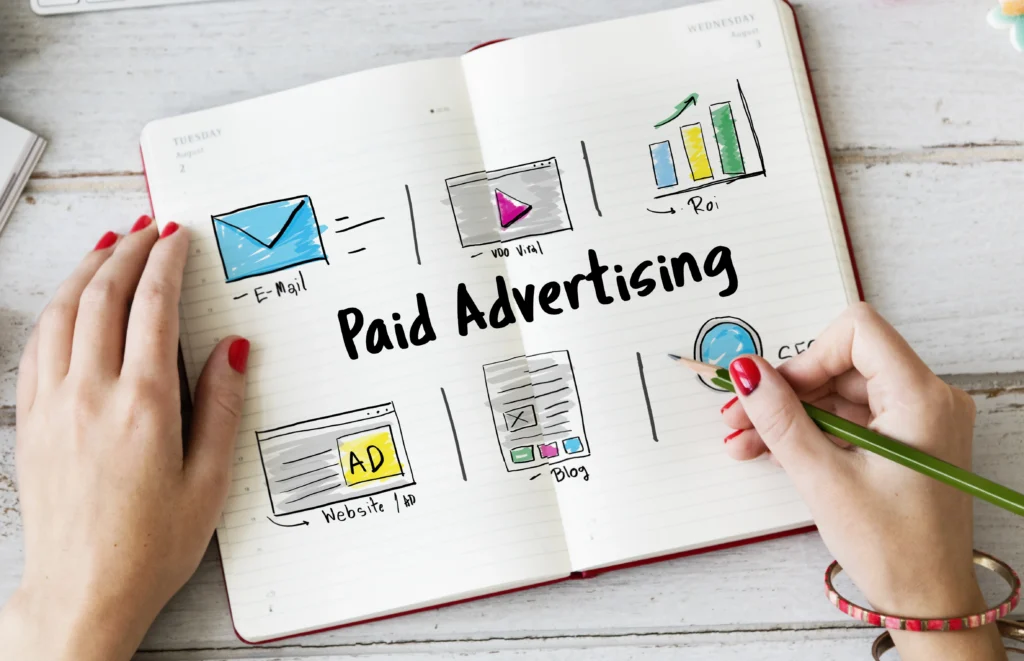
Paid Ads are online advertisements where businesses pay to promote their products or services on search engines and social media platforms. Unlike SEO, which focuses on organic rankings, paid advertising allows your business to appear instantly at the top of search results or in users’ social media feeds. This makes it a powerful strategy for generating immediate traffic and leads.
One of the most common forms of paid advertising is PPC (Pay-Per-Click). In PPC advertising, you only pay when someone clicks on your ad. Instead of paying for visibility alone, you pay for actual user interaction, which makes it a performance-based marketing model.
In search engine advertising, businesses bid on specific keywords related to their products or services. When users search for those keywords, ads appear at the top of the search results page. The position of your ad depends on factors like bid amount, ad quality, and relevance.
Paid ads are also widely used on social media platforms where businesses can target users based on demographics, interests, behavior, location, and more. This advanced targeting makes PPC advertising highly effective for reaching the right audience at the right time.
The biggest advantage of paid advertising is speed. While SEO may take months to show results, paid ads can start generating traffic and leads within hours of launching a campaign. However, traffic stops once you stop paying, which is why budget planning and strategy are essential for long-term success.
Popular Paid Advertising Platforms (Google Ads, Social Media Ads)
Paid advertising can be done across multiple platforms depending on your target audience and business goals. The two most popular categories are search engine advertising and social media advertising.
1. Google Ads
Google Ads is one of the most powerful paid advertising platforms. It allows businesses to show ads on Google search results, YouTube, and across millions of websites in the Google Display Network. With Google Search Ads, your business appears at the top of search results when users search for specific keywords. This is highly effective because you target people who already have buying intent. Google Ads also offers Display Ads, Video Ads, Shopping Ads, and Remarketing campaigns, making it suitable for both lead generation and e-commerce businesses.
2. Social Media Ads
Social media advertising allows businesses to promote their products or services on platforms like Facebook, Instagram, LinkedIn, and others. Unlike search ads, social media ads target users based on interests, demographics, behavior, and engagement patterns. These ads are ideal for brand awareness, audience targeting, and retargeting campaigns. Social media platforms also offer various ad formats such as image ads, video ads, carousel ads, story ads, and lead generation forms.
Both Google Ads and Social Media Ads have their own advantages. Google Ads is powerful for capturing high-intent customers, while social media ads are excellent for targeting specific audiences and building brand awareness. Choosing the right platform depends on your business goals, budget, and target market.
Advantages of SEO for Long-Term Growth
SEO is one of the most powerful digital marketing strategies for building sustainable and long-term business growth. Unlike paid ads, which stop generating traffic once the budget runs out, SEO continues to deliver results over time. Here are the key advantages of SEO for long-term growth:
1. Consistent Organic Traffic
Once your website ranks well on search engines, it can generate regular and consistent traffic without paying for every click. High-ranking pages continue to attract visitors daily, creating a steady flow of potential customers.
2. Cost-Effective Marketing
Although SEO requires time and effort, it does not require ongoing payment per click like paid advertising. Over time, the cost per lead becomes significantly lower compared to PPC campaigns.
3. Builds Brand Credibility and Trust
Websites that appear at the top of organic search results are often perceived as more trustworthy and authoritative. Strong SEO helps establish your brand as an industry expert.
4. Long-Lasting Results
With proper optimization and regular updates, SEO results can last for months or even years. Unlike paid ads, traffic does not disappear immediately if you pause your marketing budget.
5. Higher ROI Over Time
SEO may take time to show results, but once rankings improve, the return on investment increases significantly. Long-term organic visibility leads to better conversion rates and sustainable growth.
6. Improves User Experience
SEO involves optimizing website speed, mobile-friendliness, and content quality. These improvements enhance user experience, which leads to higher engagement and better conversions.
Overall, SEO is a strategic investment that helps businesses build authority, generate sustainable traffic, and achieve long-term digital growth.
Advantages of Paid Ads for Instant Results
Paid advertising is one of the fastest ways to generate traffic, leads, and sales online. Unlike SEO, which takes time to build rankings, paid ads can deliver immediate visibility as soon as a campaign goes live. Here are the key advantages of paid ads for instant results:
1. Immediate Visibility
Paid ads allow your business to appear at the top of search engine results or in social media feeds instantly. This is especially useful for new businesses, product launches, or limited-time offers.
2. Quick Lead Generation
Since ads target users who match specific criteria, you can start receiving inquiries, sign-ups, or sales within hours of launching a campaign.
3. Highly Targeted Audience
Paid advertising platforms let you target users based on keywords, location, age, interests, behavior, and more. This ensures your ads are shown to the most relevant audience.
4. Full Budget Control
You can set daily or monthly budgets according to your business needs. Campaigns can be adjusted, paused, or scaled anytime, giving you complete financial control.
5. Measurable and Data-Driven
Paid ads provide detailed analytics such as clicks, impressions, conversions, and cost per lead. This allows businesses to track performance accurately and optimize campaigns for better results.
6. Faster Testing and Optimization
Paid campaigns make it easy to test different audiences, ad creatives, and offers quickly. You can identify what works best and refine your strategy in a short time.
Overall, paid ads are ideal for businesses that need immediate traffic, quick conversions, and fast market testing.
Limitations and Challenges of SEO
While SEO is a powerful long-term strategy, it also comes with certain limitations and challenges. Businesses need patience, consistency, and proper execution to see meaningful results. Here are the main challenges of SEO:
1. Takes Time to Show Results
SEO is not an instant solution. It can take several months to see noticeable improvements in rankings and traffic, especially in competitive industries.
2. High Competition
Many businesses are targeting the same keywords, making it difficult to rank on the first page of search results. Competing with established websites requires strong content and backlink strategies.
3. Constant Algorithm Updates
Search engines frequently update their algorithms. Changes in ranking factors can impact website performance, requiring continuous monitoring and adjustments.
4. Requires Ongoing Effort
SEO is not a one-time activity. Regular content updates, technical improvements, and link-building efforts are necessary to maintain rankings.
5. No Guaranteed Rankings
Even with proper optimization, there is no absolute guarantee of achieving top rankings. Search engine results depend on multiple factors, including competition and algorithm changes.
6. Technical Complexity
Technical SEO issues such as slow website speed, crawl errors, or poor site structure can negatively affect rankings. Fixing these issues may require professional expertise.
Although SEO has these challenges, with the right strategy and consistency, it can deliver sustainable and long-term business growth.
Limitations and Risks of Paid Advertising
While paid advertising delivers quick results, it also comes with certain limitations and risks that businesses should consider before investing heavily in it. Understanding these challenges helps in better planning and budget management.
1. Continuous Cost Involvement
Paid ads require ongoing spending. The moment you stop your campaigns, traffic and leads usually stop as well. Unlike SEO, there is no long-term traffic benefit once the budget ends.
2. Increasing Competition and CPC
In competitive industries, the cost per click (CPC) can become very high. As more businesses bid on the same keywords, advertising costs increase, reducing profit margins.
3. No Guaranteed Conversions
Clicks do not always translate into sales or leads. If targeting, ad copy, or landing pages are not optimized properly, businesses may spend money without achieving desired results.
4. Ad Fatigue
When the same audience repeatedly sees the same ads, engagement can drop. This is known as ad fatigue and can reduce campaign performance over time.
5. Risk of Poor Targeting
Incorrect audience targeting can lead to wasted ad spend. Without proper research and strategy, ads may reach users who are not interested in your product or service.
6. Platform Dependency
Paid advertising depends heavily on platforms like search engines or social media networks. Policy changes, account suspensions, or algorithm updates can impact campaign performance suddenly.
Although paid advertising is effective for quick growth, it requires careful strategy, monitoring, and optimization to avoid unnecessary losses and ensure a positive return on investment.
SEO vs Paid Ads: Cost Comparison
When deciding between SEO and Paid Ads, cost is one of the most important factors businesses consider. Both strategies require investment, but the way you spend money and the long-term financial impact are very different.
SEO Cost Structure
SEO usually involves upfront and ongoing investment in content creation, website optimization, technical improvements, and link building. You may need to hire an SEO expert or agency, which comes with a monthly retainer fee. However, you do not pay for each click or visitor. Once your website ranks well, it can generate traffic continuously without additional per-click costs. Over time, the cost per lead typically decreases, making SEO more cost-effective in the long run.
Paid Ads Cost Structure
Paid advertising works on a pay-per-click or pay-per-impression model. This means you pay every time someone clicks on your ad or views it. The cost depends on competition, industry, and keyword demand. In competitive markets, cost per click can be high, and you need a consistent budget to maintain visibility. If you stop paying, your traffic stops immediately.
Short-Term vs Long-Term Cost Impact
In the short term, paid ads may seem easier because you can control the budget and start with small amounts. However, continuous spending is required to maintain results. SEO may require more patience and initial effort, but over time it delivers sustainable traffic without paying for each visitor.
Which is More Cost-Effective?
If your goal is immediate results and you have a flexible budget, paid ads can be effective. If you are focused on long-term growth and reducing cost per lead over time, SEO is generally more economical. Many successful businesses use a combination of both to balance short-term gains with long-term sustainability.
SEO vs Paid Ads: Time to See Results
When deciding between SEO and Paid Ads, cost is one of the most important factors businesses consider. Both strategies require investment, but the way you spend money and the long-term financial impact are very different.
SEO Cost Structure
SEO usually involves upfront and ongoing investment in content creation, website optimization, technical improvements, and link building. You may need to hire an SEO expert or agency, which comes with a monthly retainer fee. However, you do not pay for each click or visitor. Once your website ranks well, it can generate traffic continuously without additional per-click costs. Over time, the cost per lead typically decreases, making SEO more cost-effective in the long run.
Paid Ads Cost Structure
Paid advertising works on a pay-per-click or pay-per-impression model. This means you pay every time someone clicks on your ad or views it. The cost depends on competition, industry, and keyword demand. In competitive markets, cost per click can be high, and you need a consistent budget to maintain visibility. If you stop paying, your traffic stops immediately.
Short-Term vs Long-Term Cost Impact
In the short term, paid ads may seem easier because you can control the budget and start with small amounts. However, continuous spending is required to maintain results. SEO may require more patience and initial effort, but over time it delivers sustainable traffic without paying for each visitor.
Which is More Cost-Effective?
If your goal is immediate results and you have a flexible budget, paid ads can be effective. If you are focused on long-term growth and reducing cost per lead over time, SEO is generally more economical. Many successful businesses use a combination of both to balance short-term gains with long-term sustainability.
SEO vs Paid Ads: ROI & Sustainability
When comparing SEO and Paid Ads, return on investment (ROI) and long-term sustainability are key decision-making factors. Both strategies can generate strong results, but they differ significantly in how profits are built and maintained over time.
ROI in SEO
SEO typically delivers a higher ROI in the long run. Although it takes time to achieve strong rankings, once your website starts ranking on the first page, it can generate consistent organic traffic without paying for every click. Over time, the cost per lead decreases while traffic and conversions continue. Because SEO builds authority and trust, it often results in better engagement and higher conversion rates. The longer you invest in SEO, the stronger your digital presence becomes.
ROI in Paid Ads
Paid Ads can generate a faster ROI in the short term. Since campaigns can be launched quickly, businesses can start seeing leads and sales almost immediately. However, ROI depends heavily on proper targeting, ad quality, and landing page optimization. If campaigns are not managed well, ad spend can exceed returns. Additionally, once you stop paying for ads, traffic and leads usually stop, which affects long-term profitability.
Sustainability Comparison
SEO is highly sustainable because rankings, once achieved, can continue driving traffic for months or even years with proper maintenance. It builds brand credibility and long-term online visibility. Paid Ads, on the other hand, are less sustainable because they rely on continuous budget allocation. The moment spending stops, visibility disappears.
Final Perspective
If your focus is long-term growth and building a strong online presence, SEO offers better sustainability and increasing ROI over time. If your goal is quick revenue and short-term campaigns, Paid Ads can provide immediate returns. The most effective strategy for many businesses is combining both—using Paid Ads for instant results while building SEO for long-term sustainability.
When Should a Business Choose SEO?
SEO is the right choice for businesses that want sustainable growth and long-term online visibility. While it requires patience and consistent effort, it builds a strong digital foundation that continues to deliver results over time. Here are situations when a business should choose SEO:
1. When You Want Long-Term Growth
If your goal is to build a lasting online presence and generate consistent organic traffic, SEO is the best strategy. It helps your website rank naturally and maintain visibility over time.
2. When You Have a Limited Advertising Budget
Businesses that cannot afford continuous ad spending can benefit from SEO. Although it requires investment, it does not involve paying for every click, making it more cost-effective in the long run.
3. When You Want to Build Brand Authority
Ranking organically on search engines builds credibility and trust. If your focus is on establishing your brand as an industry expert, SEO is essential.
4. When Your Industry Has Ongoing Search Demand
If customers regularly search for your products or services, SEO helps capture that demand consistently without relying solely on paid campaigns.
5. When You’re Focused on Sustainable ROI
SEO may take time to deliver results, but once rankings improve, the return on investment increases steadily. It provides long-term value rather than short-term spikes in traffic.
In short, businesses that prioritize stability, authority, and long-term profitability should invest in SEO as a core digital marketing strategy.
When Should a Business Choose Paid Ads?
Paid Ads are the right choice for businesses that need quick visibility, fast leads, and immediate results. Unlike SEO, which takes time to build momentum, paid advertising delivers instant traffic as soon as campaigns go live. Here are situations when a business should choose Paid Ads:
1. When You Need Immediate Results
If your business requires quick leads or sales, paid ads can start generating traffic within hours. This is ideal for urgent campaigns or revenue goals.
2. When Launching a New Product or Service
For new businesses or product launches, paid ads help create instant awareness and attract targeted customers quickly.
3. When Running Limited-Time Offers
Seasonal promotions, discounts, or event-based campaigns benefit from paid ads because they provide fast exposure within a specific timeframe.
4. When You Want Highly Targeted Marketing
Paid advertising allows precise targeting based on demographics, location, interests, behavior, and keywords. This helps reach the right audience at the right time.
5. When Testing Market Demand
Paid ads are excellent for testing new offers, landing pages, or target audiences. You can quickly analyze performance and adjust strategies based on data.
6. When You Have a Flexible Marketing Budget
Since paid ads require continuous spending, they are best suited for businesses that can allocate a consistent advertising budget.
In short, businesses that need speed, measurable results, and strong targeting capabilities should choose Paid Ads as part of their marketing strategy.
Why Combining SEO and Paid Ads Gives Better Results
Instead of choosing between SEO and Paid Ads, many successful businesses use both strategies together. Combining SEO and paid advertising creates a balanced marketing approach that delivers short-term wins and long-term growth at the same time.
1. Immediate Traffic + Long-Term Stability
Paid ads bring instant visibility and quick leads, while SEO builds sustainable organic traffic over time. This ensures your business generates results now while securing future growth.
2. Increased Brand Visibility
When your website appears in both paid and organic search results, it increases brand credibility and click-through rates. Users are more likely to trust and choose a business they see multiple times on the search page.
3. Better Keyword Insights
Paid ad campaigns provide fast data on which keywords convert best. You can use this data to optimize your SEO strategy and focus on high-performing search terms.
4. Improved Conversion Rates
You can retarget website visitors who came through organic search using paid ads. This improves engagement and increases the chances of converting potential customers.
5. Stronger Competitive Advantage
If competitors are only using one strategy, combining both gives your business more visibility and a stronger market presence.
6. Balanced Marketing Risk
SEO protects your business from rising ad costs, while paid ads protect you from sudden drops in organic rankings. Together, they create a more stable and reliable marketing system.
By combining SEO for long-term authority and Paid Ads for instant performance, businesses can maximize reach, improve ROI, and achieve consistent digital growth.
Final Verdict: Choosing the Right Strategy for Your Business
Choosing between SEO and Paid Ads depends on your business goals, budget, and timeline. Both strategies are effective, but each serves a different purpose.
When SEO is the Right Choice
SEO is ideal for businesses that want long-term growth, sustainable traffic, and increased brand authority. It requires patience and ongoing effort, but the results are long-lasting and cost-effective. If your goal is to build credibility, reduce long-term marketing costs, and generate consistent leads, SEO should be your core strategy.
When Paid Ads is the Right Choice
Paid Ads are perfect for businesses that need immediate visibility, fast leads, or quick sales. They are also effective for testing new products, launching campaigns, or targeting specific audiences. If your focus is on short-term results and you have a flexible budget, paid advertising can deliver instant impact.
The Optimal Approach: A Hybrid Strategy
For most businesses, the best solution is to combine both SEO and Paid Ads. Paid campaigns provide immediate traffic and data, while SEO builds long-term organic presence. This hybrid approach maximizes visibility, improves ROI, and creates a balanced marketing strategy that supports both short-term goals and long-term growth.
In conclusion, there is no one-size-fits-all answer. Assess your objectives, budget, and timeline carefully, and design a strategy that leverages the strengths of both SEO and Paid Ads for maximum results.
To learn more about how we can help your business grow online, check out our SEO services and PPC advertising solutions pages for detailed strategies.