

In today’s fast-paced digital world, companies are always looking for new ways to connect with their customers, make friends, and boost sales. Social media and paid ads are popular, but email marketing for business is still the best way to get consistent and powerful results.
Email marketing lets you talk to your audience directly and in a way that is both personal and affordable, whether you own a small startup or a well-known business. This guide will show you how to make a good email marketing plan, stay away from common mistakes, and use tried-and-true methods to grow your business.
What is email marketing for business?
Email marketing for business is when you send emails to potential and current customers to promote your products, share news, and build long-term relationships.
Email marketing lets you control all of your communication instead of relying on third-party platforms. Mailchimp and HubSpot are two tools that can help you automate campaigns, divide your audience into groups, and keep track of how well they are doing.
Why Email Marketing Is Important for Growing Your Business

A lot of businesses don’t realize how powerful email is, but it’s one of the best ways to get a return on investment (ROI) in digital marketing.
This is why email marketing works so well for businesses:
1. Talking to each other directly
Your message goes straight to your audience’s inbox without using algorithms, unlike social media.
2. High return on investment
Email marketing is cheap and often works better than paid ads.
3. Customization
You can customize emails based on what users do, what they like, and who they are.
4. Makes customers more loyal
Talking to each other on a regular basis helps build trust and long-term relationships.
5. Makes conversions happen
Emails can greatly boost sales and leads if you use the right strategy.
How to Begin Email Marketing for Business
Don’t be intimidated by email marketing if it’s new to you. Just follow these easy guidelines:
1. Establish an Effective Email List
Email list quality will determine your effectiveness. Ensure you only collect real subscribers that want to know about your business.
List-building strategies include:
Adding opt-in boxes on your site
Providing special offers or giveaways
Creating landing pages
Using lead magnets such as e-books or checklists
Do not purchase email lists; this could negatively affect your brand.
2. Selecting the Right Email Marketing Platform
You can’t effectively manage your campaigns without a suitable platform. Consider these popular platforms:
Mailchimp
ConvertKit
HubSpot
Such platforms will assist you to create and automatically send emails among other benefits.
3. Understanding Your Audience
Understanding your audience is essential for effective email marketing strategies for business.
Consider segmenting your target audience depending on their:
Interests
Purchase behavior
Locations
Degree of engagement
Emails a Business Should Send
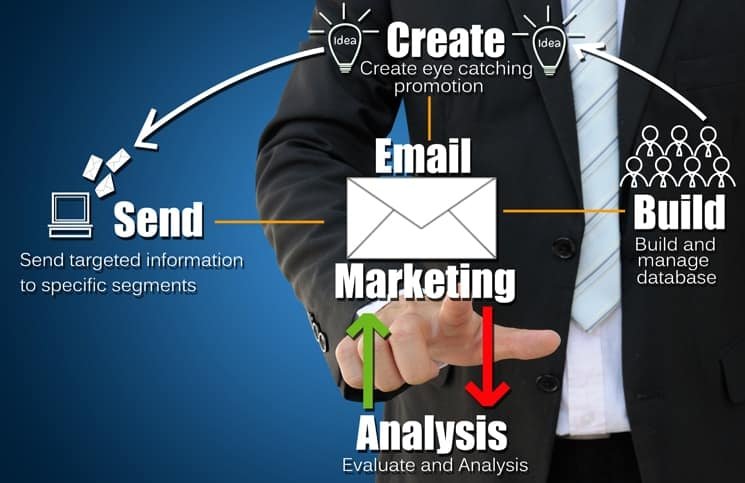
An effective email marketing plan involves sending several kinds of emails.
1. Welcome Emails
Emails that are sent when people join your mailing list. They make the first contact.
2. Promotional Emails
Emails that market your business, products, or services.
3. Newsletters
Informative emails sent periodically.
4. Follow-Up Emails
Emails sent after someone does something on your website.
5. Email Drip Campaigns
Automated emails sent to take someone on a journey.
How to Create High-Performing Emails
Creating high-performing emails can be considered one of the core elements in email marketing.
1. Create a Powerful Subject Line
The subject line influences whether you email will be opened.
Some examples include:
“Exclusive Offer Just for You!”
“Don’t miss out on the Limited-Time Offer!”
Make sure that it’s concise and attention-grabbing.
2. Personalize Your Emails
Include the name of the recipient and create personalized content according to his/her preferences.
3. Keep It Short and To-the-point
It is not necessary to use lengthy emails because their main task is to convey value.
4. Include a Strong Call-to-action
There should always be an aim behind every email message.
Some examples include:
“Sign Up Now”
“Buy Now”
“Start Today”
Email Marketing Best Practices
Here are some best practices for effective email marketing in business:
Optimize emails for mobiles
Stay consistent with timing
Use non-spammy language
Test out various subject lines (A/B testing)
Quality over quantity
Common Errors in Email Marketing
Even professionals make errors. Watch out for these:
❌ Over mailing
❌ Ignoring preferences of audience
❌ Lack of performance tracking
❌ Generic content
❌ No personalization
Making corrections to these issues will help you get better results.
Measurement of Email Marketing Success
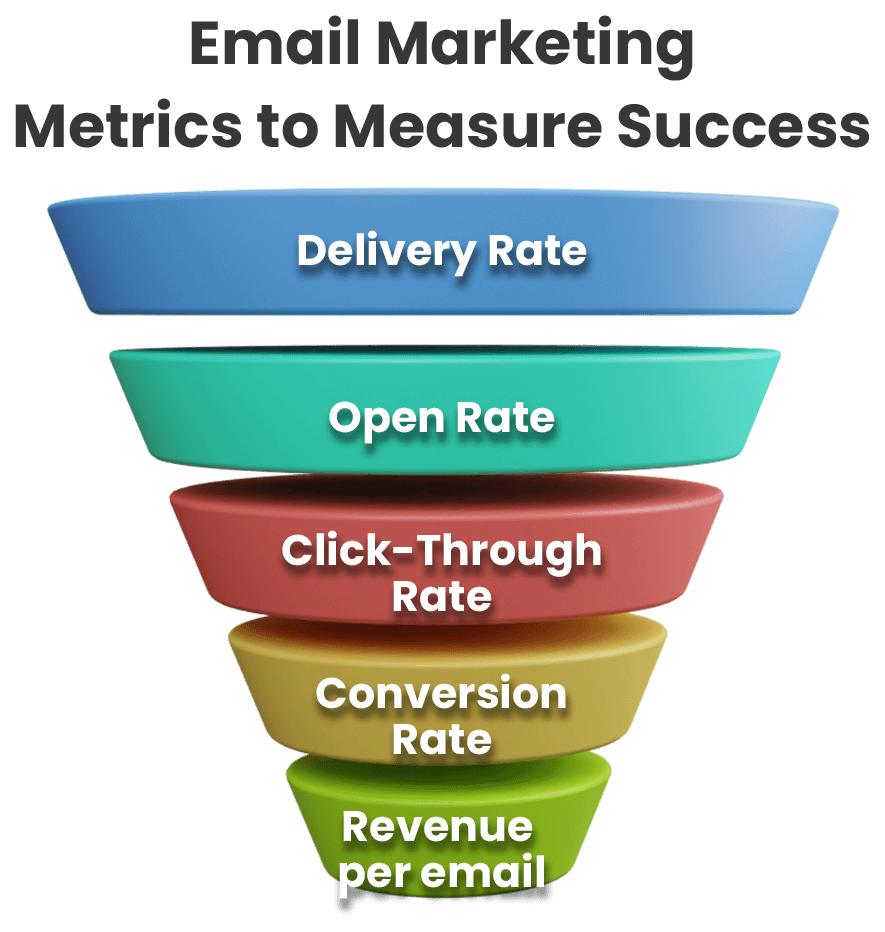
It is very important to measure the success of email marketing campaigns for their improvement.
Important metrics to track include:
Open rate: the percentage of emails opened
Click-through rate (CTR): the number of clicks on hyperlinks
Conversion rate: users who take specific actions
Bounce rate: undelivered emails
Google Analytics can be used for analyzing web traffic and conversion rates.
Advanced Email Marketing Tactics
After you have grasped the basics, try out some advanced tactics below:
1. Email Automation
Email automation is efficient and helps communicate in a timely manner.
2. Audience Segmentation
Split your audience into several groups to target them effectively.
3. Behavioral Emails
Use behavioral emails, i.e., trigger them on certain customer behavior.
4. Retargeting Campaigns
Target customers who haven’t been engaged in a long time.
Advantages of Email Marketing for Small Businesses
Email marketing is a great growth driver for small businesses through its numerous benefits:
An efficient means of marketing
A direct line of communication
Building customer relationships
Generating repeat purchases
The email marketing landscape keeps changing with technological advancements. Artificial intelligence and automation are creating innovative ways to improve email marketing.
Adapting to these developments will lead to increased engagement and conversions.
Conclusion
In an environment where there is plenty of opportunity to use various marketing channels, email marketing can be used effectively by any business. This allows for better communication, building trust, and making sure that you continue growing.
Just start with the basic approach and try out different strategies. You will gradually improve and achieve better results.